
![[HERO] Your FRCEM Exam Day Checklist: 10 Things You Should Know Before Sitting](https://cdn.marblism.com/03FNG67jPdz.webp)
So, exam day is looming. At this point, choosing a question bank is too late — the work is done, and today is about execution. The FRCEM SBA is a proper marathon: 180 questions in 3 hours, constant decision-making, and zero time for overthinking. Here are 10 practical, exam-day-only things to help you pace, prioritise, and keep your head for the full paper.
1. Do the Maths (Again): 180 Questions in 3 Hours = 1 Minute Each
On the day, you need to treat the paper like a pacing exercise. You’ve got 180 questions in 3 hours which works out as 60 seconds per question. That doesn’t mean you spend 60 seconds on every question — it means you budget 60 seconds on average.
Some will be 15–20 seconds. Some will be longer (ECG/image-heavy, drug calculations, awkward wording). The skill is noticing when you’re drifting into time-sink territory and cutting yourself off.
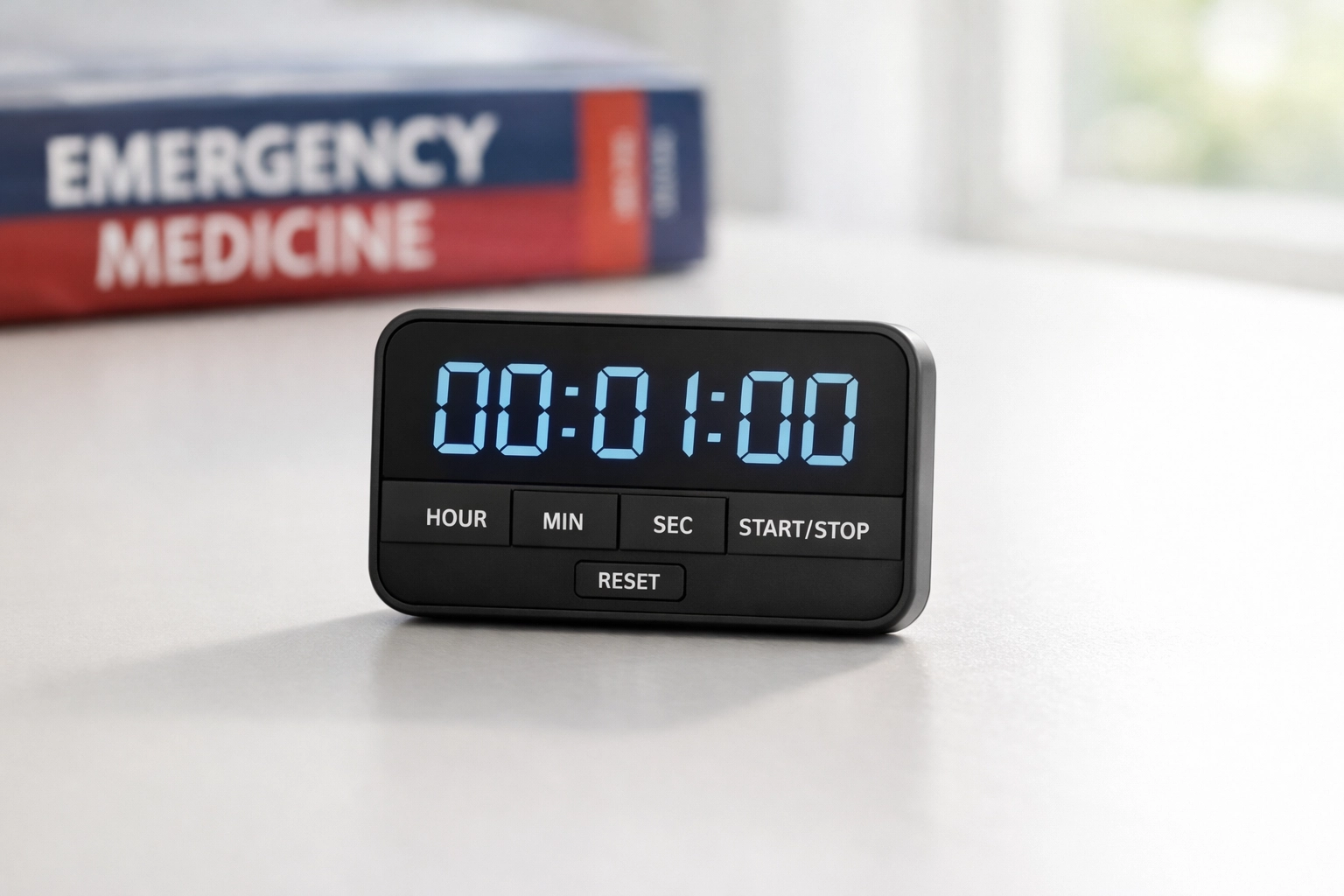
A simple rule that works: if you’re still not sure after ~60–75 seconds, you’re probably not going to magically become sure by 2 minutes. Put an answer down, flag it, and move.
2. Read the Last Line First (Then Read the Rest)
This is one of the easiest exam-day wins. Before you get lost in a long stem, look at the last line (or the actual ask) first:
- “What is the most appropriate next step?”
- “What is the most likely diagnosis?”
- “Which finding is most specific?”
- “Which option is contraindicated?”
It stops you doing loads of mental work for the wrong task. Then read the stem properly with that question in mind. It also helps you spot traps like “most appropriate immediate management” vs “definitive management”.
3. Use a “Two-Pass” Approach (Don’t Try to Win Every Question Immediately)
Your goal isn’t to feel confident on every question — it’s to maximise marks across the whole paper.
A practical way to do that is a two-pass strategy:
- Pass 1: Answer everything that’s straightforward quickly and cleanly.
- Pass 2 (review): Go back to flagged questions with whatever time you’ve protected.
This stops hard questions stealing time from easy marks. It also helps your confidence because you’re moving forward and banking points, rather than getting bogged down early.
4. Flagging Strategy: Be Ruthless (But Consistent)
Flagging is there to protect your time, not to create a “panic list”.
A simple, reliable flagging approach:
- Flag if: you’ve narrowed it to 2 options and it’s a true 50/50, you’re missing a key fact, or it needs a calculation you don’t want to do under pressure.
- Don’t flag if: you’ve made a reasonable call and you’re only doubting yourself out of anxiety.
Important: always put an answer in before flagging. A flagged blank is a future-you problem — and future-you might not get back to it.
5. Time Management Markers: Know Where You “Should” Be
Because it’s 1 minute per question, quick checkpoints keep you honest. If your exam system shows question numbers, use them.
Rough guide (don’t obsess — just sanity-check):
- 60 minutes in: ~Question 60
- 90 minutes in: ~Question 90
- 120 minutes in: ~Question 120
- 150 minutes in: ~Question 150
- 180 minutes: done, with ideally a few minutes to tidy flagged items
If you’re behind, the fix is rarely “think harder”. It’s usually “speed up, stop rereading, answer/flag/move”.
6. Don’t Let One Question Break Your Rhythm
Getting stuck doesn’t just cost time — it costs momentum. The longer you wrestle with one item, the more likely you carry stress into the next 10 questions.
A rhythm that works for most people:
- Read last line → scan stem → decide.
- If you’re not landing it quickly: answer, flag, move.
- Reset your brain on the next question (fresh start, no baggage).
This is how you keep the paper feeling manageable rather than like a slow collapse.

7. Always Pick Something (Then Move On)
On the day, the biggest unforced error is leaving anything blank. If you’re unsure:
- eliminate what you can,
- pick the best remaining option,
- flag if you must.
Perfectionism doesn’t score extra marks. Completed questions do.
8. Treat It Like a Marathon: Manage Your Mental Stamina
Three hours of SBAs is mentally heavy. It’s not just knowledge — it’s sustained focus.
A few exam-day stamina tips:
- Expect a dip around the middle third (it’s normal).
- If you notice yourself rereading the same sentence: that’s fatigue — speed up, simplify, move on.
- Use micro-resets: sit back for 3 seconds, unclench your jaw/shoulders, then start the next question.
You’re not trying to feel amazing for 3 hours. You’re trying to stay functional and consistent for 3 hours.
9. Keep Your Decision-Making Simple (This Is Not the Time for Fancy)
When you’re tired, you start overcomplicating. On exam day, the best candidates are often the ones who stay boring and consistent.
If a question is asking for:
- most appropriate next step → pick the safest, most guideline-y immediate action.
- most likely diagnosis → go with the pattern that fits best, not the zebra.
- next investigation → choose the test that changes management now.
You’re aiming for reliable marks, not academic debate.
10. Finish Strong: Protect the Last 10 Minutes
The final stretch is where people haemorrhage marks through avoidable stuff: rushing, misclicks, unanswered questions, and panic-reviewing everything.
A solid end-game:
- Make sure every question has an answer.
- Use remaining time on flagged questions only (don’t reopen ones you were happy with).
- Re-read the last line before you change an answer (a lot of late swaps are just misreads).
- If you’re changing, change for a clear reason — not vibes.
Then you’re done. Submit, breathe, and let it go.
The FRCEM SBA isn’t about knowing everything: it’s about knowing enough, thinking clearly, and managing your time effectively. Nail these 10 things, and you’re giving yourself the best possible chance on exam day. You’ve got this.
Want to test yourself with proper RCEM-aligned questions? Check out EMF’s question bank and get practicing.