
TL;DR. A 6-month FRCEM SBA study plan works in three phases. Months 1–2 (weeks 1–8): Foundations — read the RCEM 2021 curriculum and the FRCEM Regulations & Information Pack, build a syllabus tracker, baseline-test on RCEMLearning SBAs to find your weak SLOs. Months 3–4 (weeks 9–17): Content — work through the syllabus weighted to the blueprint (SLO3 22%, SLO1 19%, SLO4 19%, SLO5 17% first), one or two SLO blocks per week, RCEMLearning sessions paired with NICE, RCEM Best Practice Guidelines, and a question bank. Months 5–6 (weeks 18–26): Polish — switch to question-bank-driven revision, two full 180-question timed mocks, targeted re-revision of weak topics, and a final 2-week consolidation. Aim for 60–90 minutes per weekday and a 3–4 hour block at weekends; protect 2 days fully off per week.
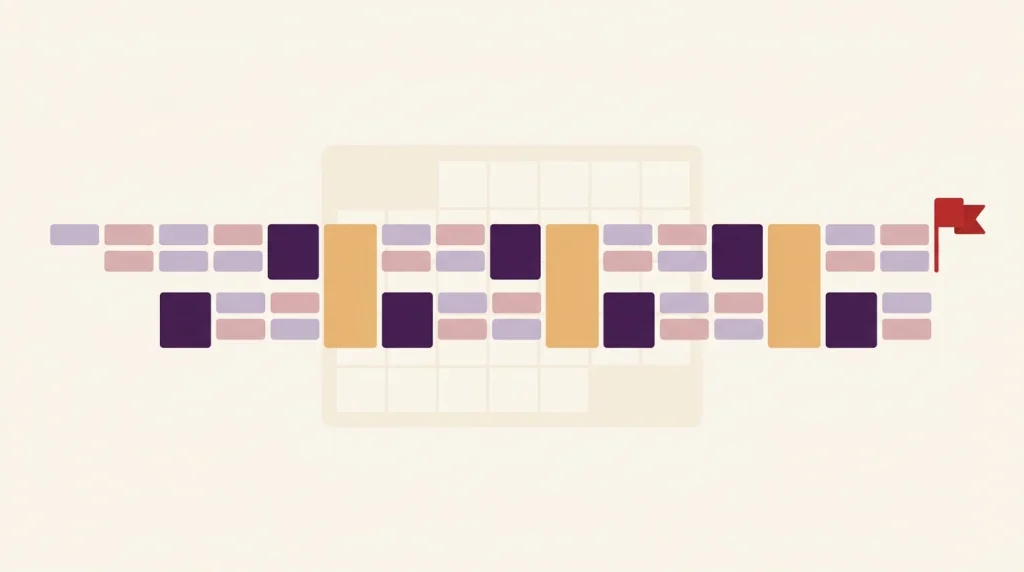
flowchart LR
    P1[Weeks 1 to 8
Curriculum sweep
Tintinalli + SBAs by topic] --> P2[Weeks 9 to 16
Question bank
Mixed-topic blocks]
    P2 --> P3[Weeks 17 to 22
Weak spots
Spaced repetition]
    P3 --> P4[Weeks 23 to 26
Mocks + polish
Full-length papers]
    P4 --> Day([Exam day])
You have six months until your FRCEM SBA. That is enough time to pass first sitting if the plan is weighted to the blueprint and you front-load foundations before you touch question banks. Trainees who fail rarely fail because they did not work hard — they fail because they hammered MCQs in months 1–2 instead of building the curriculum framework first, or because they treated all SLOs as equal weight (they are not). This template is a 26-week, week-by-week structure built around the published RCEM blueprint and the patterns described by recent passers in r/doctorsUK, RCEMLearning, and the St Emlyn’s revision guide.
Is a 6-month FRCEM SBA study plan realistic if I’m working full-time in ED?
Yes, with caveats. The Luka Randic medal winner in 2022 documented his own timeline on RCEMLearning: he booked the SBA six months out, started serious structured work at the four-month mark, finished RCEMLearning sessions and SBAs by month five, and used the final month for guidelines and high-yield review. He passed first sitting. The pattern is reproducible — but only if you ring-fence the time.
For most ED registrars working a standard rota, six months gives you roughly 250–350 study hours at 60–90 minutes on weekdays and 3–4 hours at one weekend session. That is enough to:
- Work the full RCEM 2021 curriculum once at the SLO-block level
- Complete the RCEMLearning SBA bank end-to-end
- Sit two full timed 180-question mocks
- Re-revise your bottom three SLOs from mock data
It is not enough time to be a passive learner. If you are reading textbooks chapter-to-chapter at month three with no questions completed, you will not finish. If you are full-time clinical without protected SPA time, build a realistic plan — see How to Revise While Working Full Time in ED for shift-pattern templates. LTFT trainees should use the LTFT-specific revision plan instead.
How should the 6 months be split into phases?
Three phases, with clear handover criteria so you know when to move on.
| Phase | Weeks | Goal | Hand-off criteria (move on when) |
|---|---|---|---|
| Phase 1 — Foundations | 1–8 | Curriculum mapping, syllabus tracker, baseline diagnostic, regulations pack read | You can name all 12 SLOs and their question weight from memory; baseline mock done |
| Phase 2 — Content | 9–17 | Work each SLO block once, weighted to blueprint, paired with NICE/RCEM guidance | RCEMLearning sessions covered for SLO3, SLO1, SLO4, SLO5; ≥70% of bank attempted once |
| Phase 3 — Polish | 18–26 | Question-bank-driven revision, 2 full timed mocks, re-revise weak SLOs, final 2-week consolidation | Bank ≥90% complete, two 180-Q mocks done, you are scoring above your bank pass threshold |
Why this order matters: the RCEMLearning Luka Randic account, the St Emlyn’s guide, and the 2025 r/doctorsUK FRCEM SBA threads all converge on the same advice — “Go through every line of the syllabus, read the relevant section in the textbook, and do any related e-learning. Once you have finished (this will take several months) hammer question banks.” Question banks done before the curriculum sweep teach you exam style but not exam content. You will plateau around 50–55% and not know why.
What does the RCEM blueprint tell me to prioritise?
This is the single most important table in your plan. The FRCEM SBA is 180 single-best-answer questions across two 90-question, two-hour papers (with a one-hour break). RCEM publishes the question split per Specialty Learning Outcome in the FRCEM Regulations & Information Pack, applicable from 1 August 2021 and reconfirmed under the FRCEM Exam Regulations 2025:
| SLO block | Curriculum domain | Questions | % of paper | Phase 2 week allocation |
|---|---|---|---|---|
| SLO3 | Resuscitate & stabilise (incl. trauma resus, end-of-life) | 40 | 22.2% | 2 weeks |
| SLO1 | Care for physiologically stable patients (25 medical specialty areas) | 35 | 19.4% | 2 weeks |
| SLO4 | Care for injured patients (major trauma, pain & sedation) | 35 | 19.4% | 1.5 weeks |
| SLO5 | Paediatric emergency medicine | 30 | 16.7% | 1.5 weeks |
| SLO6 | Procedural skills | 13 | 7.2% | 0.5 week |
| SLO7 + SLO12 | Complex situations + management/governance | 10 | 5.6% | 0.5 week |
| SLO10 + SLO11 | Research + Quality Improvement (stats, RCT, QI) | 10 | 5.6% | 0.5 week |
| SLO8 + SLO12 | Lead the shift + manage (flow, risk, governance) | 7 | 3.9% | 0.5 week |
| Total | 180 | 100% | 9 weeks |
Source: RCEM, Regulations and Information Pack: FRCEM Final Examinations, applicable from 1 August 2021 (latest published blueprint). See the full breakdown and what each SLO covers in our FRCEM SBA blueprint guide.
The top four SLOs (SLO3, SLO1, SLO4, SLO5) account for 140 of 180 questions — 78% of the paper. If you spend equal time on all SLOs you will under-revise the high-yield 78% and over-revise the 22% that follows. Weight your Phase 2 week allocation accordingly (right-hand column above).
What does a week-by-week 26-week FRCEM SBA plan look like?
Below is the full template. Adjust dates to your sitting; this version assumes 30 May 2026 start with a late-November 2026 sitting (26 weeks). Weekly time = 5 weekdays × 75 min + 1 weekend session × 3.5 h = ~9.5 h/week (~245 h total).
| Week | Phase | Focus | Weekday work (60–90 min) | Weekend block (3–4 h) |
|---|---|---|---|---|
| 1 | Foundations | Set-up | Read FRCEM Regulations & Information Pack; download blueprint table; set up spreadsheet tracker (column per SLO, row per syllabus topic) | Read St Emlyn’s revision guide forward + contents; pick your question bank (RCEMLearning is enough — see RCEMLearning guidance) |
| 2 | Foundations | Baseline diagnostic | Read full RCEM 2021 curriculum SLO descriptors (1 SLO/day) | Sit 60-question untimed diagnostic from RCEMLearning across all SLOs; log score per SLO in tracker |
| 3 | Foundations | Critical appraisal + stats setup | RCEMLearning Critical Appraisal Dictionary; one stats concept/day (sensitivity, specificity, NNT, likelihood ratios, RR vs OR) | Work through the critical appraisal section guide |
| 4 | Foundations | SLO3 priming — resus airway/breathing | RCUK ALS algorithm; airway emergencies (CICO, awake intubation); RSI drugs | Read RSI drugs for FRCEM; ALS 2025 update sessions |
| 5 | Foundations | SLO3 priming — circulation/shock | Sepsis, anaphylaxis, major haemorrhage protocol, vasoactive drugs | Read inotropes and vasopressors; review post-ROSC care |
| 6 | Foundations | SLO3 priming — toxicology/environmental | Paracetamol, salicylate, TCA, beta-blocker, calcium-channel-blocker overdose; serotonin syndrome; envenomation | Toxbase walk-through (high-yield ED toxidromes); hypothermia, drowning, heat illness |
| 7 | Foundations | Top-20 audit | Run our Top 20 most-examined topics against your tracker — flag gaps | Review Top 10 RCEM guidelines |
| 8 | Foundations → Content | Phase 1 review + handover | Re-sit 60-question diagnostic; compare to week 2; identify your bottom 3 SLOs | Re-plan Phase 2 if needed; book a study-group slot if you have one |
| 9 | Content | SLO3 deep-dive (week 1 of 2) | RCEMLearning resus sessions; cardiac arrest variants (pregnancy, paeds, hypothermia, tox) | 50 SBAs on resus/trauma resus; review every wrong answer back to the underlying RCEM guideline |
| 10 | Content | SLO3 deep-dive (week 2 of 2) | Trauma resus, traumatic cardiac arrest, REBOA criteria, palliative/end-of-life resus decisions | 50 SBAs; finish RCEMLearning SLO3 module |
| 11 | Content | SLO1 deep-dive (week 1 of 2) — cardio, resp, neuro | ACS, arrhythmias, PE, asthma, COPD, stroke, status epilepticus | Review most-common ECGs in FRCEM; 50 SBAs on cardio/resp |
| 12 | Content | SLO1 deep-dive (week 2 of 2) — GI, renal, endo, ID, derm, ophthalmology, ENT, MH | One specialty area per weekday; rashes & spot diagnoses | 50 SBAs; finish RCEMLearning SLO1 module |
| 13 | Content | SLO4 deep-dive (week 1) — major trauma | ATLS sequence, traumatic brain injury (NICE NG232), c-spine clearance, chest trauma, pelvic binders | Read top trauma topics for FRCEM; 50 SBAs |
| 14 | Content | SLO4 deep-dive (week 2) — orthopaedics, pain & sedation | Limb-threatening injuries, compartment syndrome, common fractures (Lisfranc, scaphoid, Galeazzi/Monteggia) | Read most common orthopaedic questions + ED sedation essentials; 50 SBAs |
| 15 | Content | SLO5 deep-dive (week 1) — paeds resus & airway | APLS algorithm, paediatric DKA, anaphylaxis, sepsis (NICE NG143), bronchiolitis, croup | 50 SBAs on paeds; weight-based dosing flashcards |
| 16 | Content | SLO5 deep-dive (week 2) — paeds medical/surgical/safeguarding | Limp, intussusception, NAI flags, febrile child, neonatal jaundice, paeds head injury | 50 SBAs; finish RCEMLearning paeds module |
| 17 | Content | Smaller SLO sweep + Phase 2 close | SLO6 procedural skills (Mon–Tue); SLO7/12 governance & complaints (Wed); SLO10/11 research/QI (Thu–Fri) | 50 mixed-topic SBAs; first full timed mock (180 Q over 2×90) — record SLO-level breakdown |
| 18 | Polish | Mock 1 debrief | Go through every wrong answer; map to RCEM guideline or NICE; update tracker | Re-revise bottom 2 SLOs from mock 1 |
| 19 | Polish | Bank-driven revision A | 50 timed SBAs/day on weakest 3 SLOs; review each wrong answer | Re-do RCEMLearning sessions in weak SLOs |
| 20 | Polish | Bank-driven revision B | 50 timed SBAs/day on remaining bank; SBA Revise modules (RCEMLearning) | RCEM Best Practice Guidelines — read top 10 in full |
| 21 | Polish | Guideline consolidation | NICE: sepsis (NG51/NG143), TBI (NG232), AKI, asthma (NG245), VTE (NG158) | RCEM guidelines: traumatic cardiac arrest, paediatric pain, agitated patient, mental capacity |
| 22 | Polish | High-yield spots | ECGs (LITFL 100 ECGs), CXR, CT head patterns, ophthalmology spot diagnoses, rashes | Review Top 50 emergency drugs |
| 23 | Polish | Pace & technique | 50 SBAs/day timed at 42 sec/question; practise flagging-and-returning | Second full timed mock (180 Q over 2×90); compare SLO-level scores to mock 1 |
| 24 | Polish | Mock 2 debrief + targeted re-revision | Wrong-answer review across both mocks; audit yourself against the 5 biggest SBA mistakes | Re-do weakest SLO from scratch |
| 25 | Polish | Consolidation week 1 of 2 | RCEM critical appraisal dictionary; stats refresh; common cognitive errors (read common cognitive errors and trick-spotting) | 50 SBAs on previously-wrong questions only |
| 26 | Polish | Final week | Light reading only: Last 2 weeks before FRCEM checklist; logistics, ID, exam centre, sleep | Rest day before exam; no new content |
How many hours per week do I actually need?
The honest answer from recent passers is 8–12 hours per week sustained, with surge weeks of 15+ hours either side of the two mocks. Below that floor you will not cover the curriculum; above 15 hours sustained over six months you will burn out and your retention drops. The Luka Randic 2022 account describes the same pattern: 30-minute RCEMLearning sessions on commutes, 60–90 minutes after the child went to bed on weekdays, longer blocks on a protected day off.
Practical sc