
TL;DR: Yes — passing MRCEM Primary, SBA and OSCE inside 18 months is feasible, and a small minority of candidates do it every diet. The realistic sequence is Primary → SBA → OSCE in that order, because each component is an eligibility gate for the next. The cleanest 18-month route looks like: April Primary, January SBA, May–November OSCE the following year. You need to be in an EM post or about to start one, sit each exam on the first available diet after eligibility opens, and accept that you will spend most of those 18 months either revising or recovering from revising. This article walks through the timing, the cost (£1,400–£2,500+ in fees alone), the eligibility traps that quietly add six months if you miss them, and the honest VOC on what the pace actually feels like. See also our guide to how many months to revise for the SBA.
flowchart LR
    M1[Months 1 to 4
Primary prep] --> P1{{Sit Primary}}
    P1 --> M2[Months 5 to 10
SBA prep]
    M2 --> P2{{Sit SBA}}
    P2 --> M3[Months 11 to 16
OSCE prep]
    M3 --> P3{{Sit OSCE, months 17 to 18}}
Facts last verified .
Can you really sit all three MRCEM exams within 18 months?
Yes — but “can” and “should” are different questions, and the College timetable does a lot of the work of deciding for you. RCEM gives candidates seven years to complete all three MRCEM components once Primary is passed, so 18 months is an aggressive compression of the same pathway, not a separate fast-track route. There is no shortcut exam, no combined sitting, no diet you can apply for that bundles two papers together.
What makes 18 months realistic is the diet frequency. Primary runs twice a year (April and October), SBA runs twice a year (January and September), and OSCE runs roughly three times a year in London plus diets in India, Malaysia and other international centres. That is enough cadence that — if you pass each one first time and apply within the eligibility window — you can chain all three without ever waiting longer than ~4 months between sittings.
The catch is the eligibility ladder. You cannot apply for SBA until you have passed Primary, and you cannot apply for OSCE until you have passed both Primary and SBA and have at least 6 months of post-Foundation Emergency Medicine experience. Miss a diet by a week because results were not back in time and you have just added 3–4 months to your timeline.
Who is this 18-month plan actually for?
Be honest with yourself before you commit. The candidates who pull this off tend to share a profile:
- ST3 or equivalent UK trainees trying to align CCT timing with a specific job market, fellowship application, or relocation date.
- IMGs already working in Emergency Medicine — usually in the UK, Ireland, or a Gulf/South Asian EM department — who need MRCEM for a Tier-2 sponsored ST4 entry, MTI scheme, or specialist registration.
- Doctors with no caring responsibilities in the 18-month window. Multiple Reddit threads on r/doctorsUK and r/JuniorDoctorsUK make this point unprompted: the people who do all three back-to-back are mostly single, child-free, and have a partner or family who tolerates them being absent on weekends.
- Strong test-takers with recent basic science — Primary is essentially a re-sit of pre-clinical anatomy, physiology, pharmacology, microbiology and evidence-based medicine. If you graduated more than five years ago and have not touched it since, that 180-question MCQ is brutal and adds months of prep.
If you are mid-career, have young kids, are an IMG still trying to get into an EM rotation, or you struggle with timed MCQs under pressure — the same pathway is open to you, just on a 24–36 month timeline. There is no clinical advantage to 18 months over 36 months. The advantage is administrative.
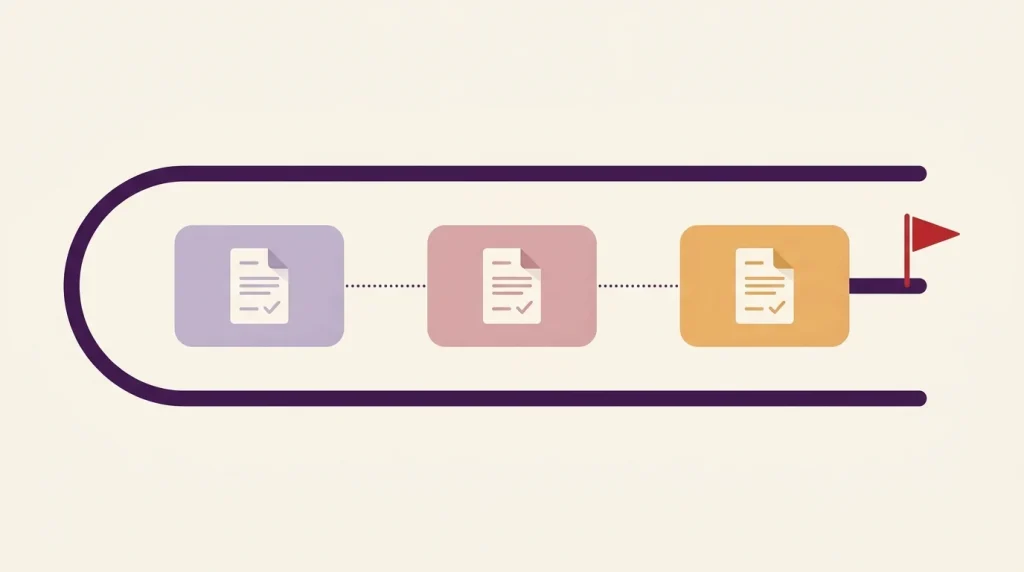
What is the actual 18-month sequence?
Working backwards from the RCEM 2026 calendar and the published 2026 diets, here is the most achievable sequence for a candidate starting their prep now (mid-2026). Dates beyond October 2026 follow the historical RCEM pattern (Primary in April/October, SBA in January/September, OSCE roughly Jan / May–Jun / Nov in London) and are subject to RCEM confirming the 2027 calendar.
| Month | Milestone | What you are doing |
|---|---|---|
| Month 0 (Jul 2026) | Apply for Oct 2026 Primary | Application window 15 Jul – 22 Jul 2026. Start Primary revision now if not already; 3–4 months of question banking is the consensus minimum. |
| Month 3 (Oct 2026) | Sit MRCEM Primary | 27 October 2026 at a Pearson VUE test centre. 180 SBA questions in 3 hours. |
| Month 5 (Dec 2026) | Primary results | Released 1 December 2026. If passed, you are eligible to apply for SBA. |
| Month 6 (Jan 2027) | Apply for Sep 2027 SBA | The Jan 2027 SBA application closes before Primary results — you cannot apply for it. September 2027 is your first realistic SBA. Begin SBA prep immediately; this is clinical EM, very different from Primary. |
| Month 14 (Sep 2027) | Sit MRCEM SBA | 180-question SBA across 3 hours. Pass rate has been the lowest of the three at recent diets (30.9% in 2024 per RCEM data), so do not under-prep. |
| Month 15 (Oct/Nov 2027) | SBA results + apply for OSCE | Results within ~6 weeks. Apply for the next available OSCE diet (London Nov 2027 if results land in time, otherwise Jan or Mar 2028). |
| Month 16–18 (Nov 2027 – Jan 2028) | Sit MRCEM OSCE | 16 stations, 2h 42m. London, India, or Malaysia. You have ~6 weeks of focused OSCE prep — do a face-to-face course. |
That sequence delivers MRCEM in roughly 15–18 months from first sitting Primary. If you started revising for Primary in March 2026, total elapsed from book-open to MRCEM-letters is closer to 22 months. The “18 months” framing in this article — and in most of the Reddit threads where candidates describe pulling it off — refers to the exam-to-exam window, not the prep-to-letters window. See also our guide to how many hours per week MRCEM Primary really needs.
What does it cost in cash, all-in?
Exam fees only get you so far. Most candidates also pay for at least one question bank and a face-to-face OSCE course; many sit an in-person SBA course too. Below is a realistic spend for an international member (the typical IMG profile) sitting all three first-time in the UK.
| Item | 2026 cost (£) | Notes |
|---|---|---|
| RCEM Associate / Member subscription × 2 yrs | ~£340–£680 | Required to access the discounted exam fees. Worth it on a 3-exam plan. |
| MRCEM Primary fee (Member, International) | £485 | Non-member International is £609. |
| MRCEM SBA fee (Member, International) | £485 | Same fee structure as Primary. |
| MRCEM OSCE fee (Member, London) | £586 | £987 in India, £1,121 in Malaysia. |
| Question bank subscription (12 months) | £100–£250 | Pick one well-reviewed bank; multiple banks rarely add value. |
| OSCE prep course (1–2 days) | £300–£700 | Most candidates do at least one; some do two. |
| Optional SBA course | £150–£400 | Useful if your clinical EM exposure is thin. |
| Travel + accommodation for OSCE (if applicable) | £200–£900 | London hotels around exam dates are not cheap. |
| Realistic total | £2,650 – £4,500+ | Add visa, time off work, and re-sit costs if anything goes wrong. |
If you are non-member throughout and based outside the UK, expect the upper end. If you are a UK trainee with study budget covering at least one course and a question bank, your out-of-pocket can come in well under £2,000.
What are the eligibility traps that quietly add 6 months?
These are the rules people miss. Each one can push your finish date back by a whole diet cycle.
SBA needs 2 years post-PMQ — including internship
You must have at least 2 years of medical experience after primary medical qualification, internship or house jobs included. Most UK FY1+FY2 doctors and IMGs with one full internship satisfy this comfortably, but newly-qualified IMGs sometimes try to apply at 18 months and get rejected at application review.
OSCE needs 6 months FTE EM above Foundation level
This is the trap that catches the most ambitious early-career candidates. The 6 months must be in Emergency Medicine, post-full-registration, and at a level above Foundation training (or equivalent in your jurisdiction). FY2 EM does not count. Locum SHO EM does. CT1/ACCS EM does. If you are an IMG, you need 6 months of bona-fide EM SHO-or-above experience, evidenced.
Eligibility is at application, not at exam date
You must meet all criteria when you apply, not when you sit the exam. So waiting another 3 months to sit a later diet does not help if you are short at the application window. See also our guide to a realistic MRCEM Primary plan in 3 months.
The 7-year currency clock starts at MRCEM Primary
Once you pass Primary, you have 7 years to complete SBA and OSCE. Not directly relevant on an 18-month plan, but it means there is no harm in sitting Primary early and parking the project briefly if life gets in the way — you have time.
How much actual study time does this need?
VOC from Reddit and the wider IMG community is reassuringly consistent on this.
- Primary: 8–12 weeks of focused question-bank work, alongside full-time clinical hours. Candidates who graduated recently often get away with 6 weeks; candidates more than 5 years out of medical school report needing 4 months. One Reddit r/JuniorDoctorsUK comment on a popular MRCEM thread: “Primary was a month or two of question banks while working and while I could still remember much of medical school.”
- SBA: 3–4 months. Recent threads on r/doctorsUK describe the SBA as significantly harder than Primary because the question structure is interpretive and the breadth is vast — paeds, toxicology, ENT, ophthalmology, the lot. Several recent posters who passed first-time describe “chunks of study leave” and “10+ days of pretty much full-time prep” in the weeks immediately before the exam.
- OSCE: 6–10 weeks of structured station practice with at least one mock day and one in-person course. The OSCE is not knowledge-limited for most candidates — it is performance-limited. You need to rehearse out loud, with timers.
Add it up: across 18 months you are looking at roughly 8–10 months of meaningful study, layered on top of full clinical hours. There is no realistic version of this plan where you also have a rich personal life. Be honest with the people who care about you before you start.
What is the realistic toll on your training and your life?
The peer-to-peer view is consistent and worth taking seriously. Three patterns come up repeatedly in r/doctorsUK and r/emergencymedicine threads from candidates who attempted the full chain inside ~18 months:
- Clinical performance dips mid-cycle. Several posters describe a clear drop in night-shift functioning during the 4–6 weeks before each exam. If you are also expected to teach, supervise, or carry a heavy clinical role, plan around it.
- Relationships take the hit. Multiple threads include a variant of “my partner deserves a medal.” Several IMG candidates report having moved to the UK alone specifically so family obligations would not interrupt the pace — a strategy with its own costs.
- Failing one exam halfway through is the worst-case scenario. A first-time fail on SBA pushes everything back by ~8 months and is the most common reason a planned 18-month chain becomes a 24-month chain. The exam with the lowest first-time pass rate (SBA at ~31% in 2024) is also the one in the middle, which is what makes the whole sequence fragile.
If you genuinely cannot afford a 6-month slippage — for visa, CCT, or job-start reasons — build slack into the plan from day one. Sit Primary in April rather than October. Pay for the better question bank. Take the OSCE course. The fees are trivial compared to the cost of a missed diet.
What if you fail one of them?
Plan for it. Roughly:
- Failing Primary costs you 6 months — next diet is April or October. The 18-month plan is dead in its original form but a 24-month plan is still very achievable.
- Failing SBA costs ~8 months — next diet is January or September. This is the worst place to fail because OSCE eligibility is held up too.
- Failing OSCE costs 3–5 months — diets are more frequent and you can travel to India or Malaysia to shorten the wait if you are willing to absorb the higher fee.
RCEM caps OSCE attempts at six lifetime sittings. SBA and Primary do not have a hard cap but the 7-year currency rule means repeated failures will start to bite. None of this is a reason not to try; it is a reason to over-prepare for SBA in particular.
FAQ
Is 18 months the fastest possible time to MRCEM?
No. In theory, if Primary results land before the next SBA application window and SBA results land before the next OSCE application window, the absolute minimum is closer to 13–14 months. In practice the result-release lag and application timing mean 15–18 months is the floor for almost everyone.
Can I take MRCEM SBA before Primary?
No. RCEM requires Primary to be passed before SBA application. The exams are not interchangeable.
Do I need to be RCEM Member to sit the exams?
No, but you save ~£100 per exam by being a member, and the membership fee is much less than the cumulative saving across three sittings. Join before applying for the first exam.
Can I sit MRCEM OSCE outside the UK?
Yes. RCEM runs OSCE diets in India (Chennai, Hyderabad) and Malaysia, with capacity to expand. International OSCE fees are higher (£987 India, £1,121 Malaysia, member rates) but can shorten your wait significantly.
Does FY2 EM count toward the 6-month OSCE eligibility?
No. The 6 months must be at a level above Foundation, after full registration. CT1/ACCS EM, locum SHO EM, and international equivalents at SHO grade all count.
What is the pass rate for each exam?
Per RCEM 2024 data circulated by exam providers: MRCEM Primary 57.4%, MRCEM SBA 30.9%, FRCEM SBA 51.5%. OSCE pass rates published by RCEM tend to sit above SBA but below Primary. The SBA is the bottleneck — plan accordingly.
How much study leave should I ask for?
UK trainees typically use 5–10 days of study leave per exam, concentrated in the final fortnight before each sitting. IMGs without formal study leave should plan to take annual leave at the same point — going in cold from a run of nights is a near-guaranteed fail on SBA.
Can I do all three while pregnant or with a newborn?
Pregnant or recently-postpartum candidates can request reasonable adjustments from RCEM — extra time, rest breaks, breastfeeding facilities — and the College accommodates these. Whether 18 months is achievable in this period is an individual judgment call; most candidates in this situation extend to 24–36 months without penalty.
Is there any benefit to sitting Primary and SBA close together?
The eligibility ladder rules this out — you cannot sit SBA before passing Primary, and Primary results take ~6 weeks. There is no “back-to-back diet” route.
Do question banks really matter for Primary?
Yes. The consensus across multiple recent r/doctorsUK and r/JuniorDoctorsUK threads is that high-volume MCQ practice (one full pass of a major bank, plus a second pass of weak topics) is the single most predictive prep activity for Primary.
What is the most common reason the 18-month plan fails?
Underestimating SBA. Candidates who pass Primary comfortably often go in with the same prep volume for SBA and fail. SBA needs at least double the preparation time of Primary for most candidates.
Where to go from here
If you have decided you genuinely want to push through all three components in 18 months, the next decision is which question bank and which course provider will get your money. We curate exam-focused resources for MRCEM Primary, SBA and OSCE at emfinalexams.com — start there before you start a question bank trial.
Facts last verified 30 May 2026. RCEM dates and fees taken from the official 2026 examination calendar at rcem.ac.uk; please re-check the calendar before applying as 2027 diets will be confirmed in due course.
Ready to build your plan? EMF Premium gives you all 40,000 questions and 20 mocks for £59 — one payment, six months' access.