TL;DR. The FRCEM SBA pass mark is set fresh for every sitting using the modified Angoff method plus one standard error of measurement, so there is no fixed number. Recent diets have landed in the 105 to 117 out of 180 raw marks range, which is roughly 58 to 65 percent. The October 2024 paper passed at 108/180 (60 percent). Aim for a sustained mock score of 70 percent or higher if you want a safe margin, not just the latest published cut score.
If you are calibrating your mock scores against “the pass mark,” the first thing to understand is that there isn’t one. The cut score moves every diet. What is consistent is the standard you are being measured against, the rough percentage range, and the gap between feeling ready and actually being ready. This guide gives you the verified numbers, the method that sets them, and what your practice scores should look like before you book.
What is the FRCEM SBA pass mark?
There is no single FRCEM SBA pass mark. The Royal College of Emergency Medicine sets a new pass mark for every sitting using a standard-setting method called modified Angoff, then adds one standard error of measurement (SEM) on top. The final cut score is rounded to the nearest whole mark and reported on your results letter alongside your raw score and the cohort average.
In practice, recent papers have passed somewhere between roughly 105 and 117 raw marks out of 180, which is approximately 58 to 65 percent. The October 2024 FRCEM SBA passed at 108/180, sitting bang in the middle of that range.
Key facts at a glance:
- Total questions: 180 single best answer items, delivered as two 2-hour papers with a 1-hour break.
- Marking: one mark per correct answer, no negative marking.
- Standard setting: modified Angoff method plus 1 SEM.
- Typical pass mark range (recent diets): approximately 105 to 117 out of 180 (about 58 to 65 percent).
- 2024 FRCEM SBA overall pass rate: 51.1 percent (558 passes from 1,093 candidates).
- 2023 FRCEM SBA overall pass rate: 47.0 percent.
- Results released: approximately five weeks after the exam date.
What pass marks have recent diets actually been?
RCEM does not publish a historical table of FRCEM SBA pass marks. The numbers below are drawn from RCEM’s own documented examples, course provider write-ups, and candidate-reported figures from results letters. They are reliable as ballpark anchors but should not be used to predict your sitting’s pass mark.
| Diet | Raw pass mark (out of 180) | Approximate percentage | Source |
|---|---|---|---|
| March 2022 | ~108 (60 percent of 180) | ~60 percent | Independent review of RCEM assessment (Lancashire, 2023) |
| October 2024 | 108 | 60 percent | Bromley Emergency Courses, citing RCEM results letter |
| 2024 (overall) | Pass mark varied per diet; 51.1% overall pass rate | — | RCEM Exam Pass Rate Report 2024 |
For context, the FRCEM SBA’s older sibling, the MRCEM SBA, has reported cut scores in the same ballpark, for example 117 out of 179 for the September 2024 diet (after item removal). The two exams use the same standard-setting method, so the FRCEM SBA cut score tends to live in a similar zone but is not a substitute for FRCEM-specific data.
How is the pass mark actually set?
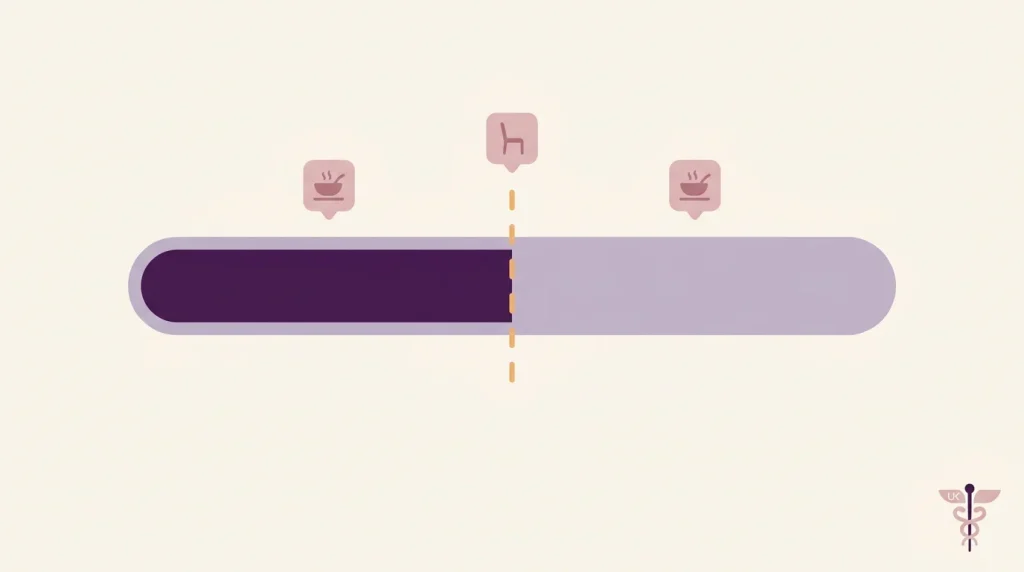
The pass mark is set by a panel of practising emergency medicine consultants who are involved in question writing and curriculum delivery, using the modified Angoff method. The process runs as follows:
- For every question in the paper, each judge independently estimates the proportion of “just competent” candidates who would answer it correctly. A judge might rate an easy question 0.85 and a harder one 0.40.
- Judges then discuss outliers and have the opportunity to revise.
- The averaged ratings for each item are summed across the whole paper to produce the Angoff cut score, the College’s best estimate of the minimum competent performance on that specific paper.
- One standard error of measurement (SEM), calculated from the cohort’s actual performance, is added on top. The SEM acknowledges that any single test score is an imperfect estimate of a candidate’s true ability; adding it builds a small fairness buffer.
- If any items are removed during post-exam quality assurance (for example, a question with an ambiguous stem), they are dropped from both the maximum mark and the Angoff total, so the denominator and the cut score both shift. The pass mark is then rounded to the nearest whole number.
In plain English: a panel of consultants reads every question and asks, “would a borderline-competent registrar get this right?” Their averaged answer becomes the cut score, with a small statistical buffer added. Different papers contain different items, so the cut score moves with them.
Why does the pass mark vary between diets?
The pass mark varies because the questions vary. Each diet uses a different mix of items pulled from the RCEM bank, and item difficulty is rarely identical between papers. When judges rate an easier paper, the summed Angoff score is higher, so the pass mark rises. A harder paper produces a lower cut score. The SEM also recalculates per cohort, which moves the final figure by another mark or two.
The point of standard setting is that this variation cancels out the difficulty difference. A pass on the March paper and a pass on the October paper both mean the same thing: you cleared the borderline-competent threshold for that specific mix of questions. There is no advantage to chasing a “softer” diet because the bar moves with the paper.
What raw score should I be aiming for in mocks?
Target a sustained 70 percent or higher across full-length, timed mock papers in the four to six weeks before your exam. That builds a margin over the typical 58 to 65 percent cut score range and absorbs the predictable drop between question-bank practice and the real exam.
A reasonable calibration ladder, based on candidate-reported experience and course-provider data:
- Consistently 75 percent or higher on full 180-question timed mocks → very strong margin. Most candidates here pass first attempt.
- 70 to 75 percent → likely to pass. Sensible to sit.
- 65 to 70 percent → borderline. Pass is possible but not safe; consider another four to six weeks of focused work on weak SLOs.
- 60 to 65 percent → at or just above the typical cut. Real risk of failing if the paper is on the easier side (cut score rises). Defer if you can.
- Below 60 percent → defer. The probability of passing is low and the financial and emotional cost of a fail is high.
Two practical notes. First, mock scores are only meaningful if the conditions match the real exam: full 180 questions, four hours total with the mid-exam break, no pausing to look anything up. Untimed bank performance flatters everyone. Second, ignore single mock scores. Look at the trend across three to five mocks in the final month. A flat line at 67 percent is more honest than a one-off 74 percent followed by 62 percent.
What is the FRCEM SBA pass rate?
The FRCEM SBA pass rate has hovered between 47 and 51 percent over the past two reported years. According to RCEM’s 2024 Exam Pass Rate Report:
- 2024: 558 passes from 1,093 candidates (51.1 percent).
- 2023: 518 passes from 1,102 candidates (47.0 percent).
The same report flags a substantial differential attainment gap. UK trainees pass at 79.6 percent overall (across all RCEM exams), while international medical graduates pass at 46.0 percent. Candidates whose first language is English pass at 64.4 percent versus 47.5 percent for those it is not. First attempts pass at 66.6 percent; subsequent attempts drop to about 31 percent. None of those numbers are FRCEM-SBA-specific, but the pattern is consistent across the College’s theory exams.
How is the pass mark reported on my results letter?
Your results letter, released about five weeks after the exam via your RCEM account, shows three numbers and an SLO breakdown:
- Your score: the number of marks you achieved out of the total possible (which may be less than 180 if items were removed).
- Pass mark: the cut score for that specific diet.
- Cohort average: the mean score across all candidates who sat that diet.
- Performance by Specialty Learning Outcome (SLO): your percentage correct per SLO domain, alongside the cohort average per SLO. The 2024 sample feedback letter shows breakdowns for SLO 1, 3, 4, 5, 6, 7, 8, 10, 11, and 12.
The SLO breakdown is the most useful part if you fail. It tells you exactly which curriculum domains cost you marks, which is what you should rebuild around for your next attempt.
Can items be removed after the exam, and does it affect my mark?
Yes. RCEM’s quality and standards team reviews response patterns after every exam. Items with statistical anomalies (for example, a question almost no candidate gets right, suggesting an ambiguous stem) can be removed. When that happens, both the maximum marks and the Angoff total are reduced for everyone. RCEM states that item removal is monitored and that no candidate has been negatively impacted by it; in most cases the proportion of passing candidates rises slightly when items are dropped.
This is why your results letter may show a denominator like 178 or 179 rather than the original 180. The cut score is recalculated against the smaller total.
What happens if I’m one or two marks below the cut?
You fail. There is no compensation, no borderline review based on SLO performance, and no auto-uplift for a near miss. The SEM that’s already baked into the pass mark is the College’s allowance for measurement error. Once the cut is set, it is binary.
Your only post-result options are:
- Appeal, but only on the grounds of a procedural irregularity or exceptional circumstance that affected your performance, supported by evidence. You cannot appeal an examiner’s judgement or the pass mark itself.
- Re-sit. You have four attempts at the FRCEM SBA (post-August 2016 sittings count toward this limit). Candidates who analyse their feedback letter properly before re-sitting pass at roughly 50-55 percent on the second attempt; candidates who repeat the same approach with the same resources rarely change the outcome.
Should I sit a particular diet because the pass mark might be lower?
No. The Angoff method is designed to equalise difficulty across diets. A paper with harder questions gets a lower cut score; an easier paper gets a higher one. Net effect: the standard you have to clear is the same. Course providers and RCEM consistently emphasise this point.
Pick your diet based on how much preparation time you realistically have, what else is going on in your professional and personal life, and when you can do four to six full-length mocks at 70 percent or higher. The diet itself is neutral.
Frequently asked questions
What was the FRCEM SBA pass mark in October 2024?
The October 2024 FRCEM SBA pass mark was 108 out of 180, equivalent to 60 percent. This is one of the few diet-specific numbers RCEM has confirmed via results letters and the only one currently in public-facing course materials.
Is the FRCEM SBA pass mark always 60 percent?
No. 60 percent is roughly the midpoint of recent cut scores but the exact figure varies per diet because the questions vary. Recent papers have sat between approximately 58 and 65 percent of the raw marks available.
How many questions do I need to get right to pass the FRCEM SBA?
Approximately 105 to 117 out of 180, based on recent diets. The exact figure depends on the standard-setting outcome for your specific paper and whether any items are removed. Aim for at least 130 in your full-length mocks (about 72 percent) to build a safe margin.
Is there negative marking on the FRCEM SBA?
No. RCEM does not apply negative marking. An unanswered question scores zero, so always answer every question even if you have to guess. Leaving items blank because you ran out of time is one of the most common preventable causes of failure.
How is the FRCEM SBA pass mark different from the FRCEM OSCE pass mark?
The FRCEM SBA uses the modified Angoff method plus 1 SEM. The FRCEM OSCE uses borderline regression plus 1 SEM, and also requires you to pass at least one resuscitation station regardless of your overall score (a rule that has applied since November 2025). The two exams cannot be compared on raw marks because they use different scales (180 marks vs 160).
When will RCEM publish my pass mark?
Approximately five weeks after the exam date. Results are released via your RCEM website account on a pre-advised date, usually by 17:00 UK time. The College does not confirm results by phone or email. A feedback letter with the SLO breakdown follows within one week of the results release.
Does the FRCEM SBA pass rate vary much by attempt number?
Yes, substantially. RCEM’s 2024 data (across all theory exams) shows first attempts pass at 66.6 percent, second attempts at 31.4 percent, third at 31.3 percent, fourth or more at 31.2 percent. The drop is striking and is one of the reasons course providers urge candidates to defer rather than sit underprepared.
Can the pass mark go down mid-exam if questions are removed?
Item removal happens post-exam, not mid-exam. If items are removed during quality assurance after the paper, both the maximum mark and the Angoff cut are recalculated against the smaller total. In practice this typically reduces the raw pass mark by one or two marks and slightly improves overall pass rates.
Is there a published list of historical FRCEM SBA pass marks?
No. RCEM publishes pass rate data annually but does not consolidate per-diet pass marks in any public document. The figures circulating in candidate forums and course-provider blogs come from individual results letters. Treat any single quoted pass mark as anecdotal unless it is sourced from RCEM directly.
What if my mock scores are sitting around the pass mark?
Defer if you can. A mock score equal to the typical cut means you are 50/50 to pass on a hard paper and likely to fail on an easier one (because the cut rises). Most candidates who pass first time are running at 70 percent or higher in the final month of mocks. Four to six extra weeks of focused work on your weakest SLOs is usually higher value than booking and hoping.
Does the pass mark apply per paper or to the full exam?
To the full exam. The two 2-hour papers are summed into one total out of 180, and the cut score is applied to that combined total. You cannot pass paper 1 and fail paper 2; the marking is unified.
Where to go from here
If you are calibrating mock performance before booking, work the numbers above into your timeline. The cut score is roughly 60 percent. Sit four to six full-length mocks in the last six weeks, in real exam conditions, and don’t book until you are running consistently at 70 percent or higher. If your scores are flat below 65 percent, defer.
For SLO-mapped FRCEM SBA practice questions, full-length timed mocks, and curriculum-aligned revision built around the actual exam blueprint, visit emfinalexams.com.
Facts last verified . Sources: RCEM FRCEM Exams page, RCEM Results, Feedback and Awarding page, RCEM Angoff Method Explained (November 2023), RCEM Exam Pass Rate Report 2024, RCEM FRCEM SBA sample feedback letter, Bromley Emergency Courses FRCEM SBA exam information page, independent review of RCEM assessment procedures (Lancashire, 2023).
Ready to build your plan? EMF Premium gives you all 40,000+ questions, 20 mocks and 1,215 OSCE stations from £29/month — or a one-off 3- or 6-month pass.