
Night before your RCEM exam, brain just landed on: do I have the right ID? Take a breath. This is the practical checklist — what to bring, what to leave at home, what time to arrive, and what happens at the door. Built for MRCEM and FRCEM candidates sitting at a Pearson VUE test centre (theory) or an RCEM OSCE venue.
Note (Jan 2026): Theory exams (MRCEM Primary, MRCEM SBA, FRCEM SBA) are now delivered by Surpass Assessment, not Pearson VUE. Check-in steps below are broadly the same but your booking confirmation, account login and on-the-day staff branding will say Surpass. OSCE remains an RCEM-direct venue.
TL;DR — the 3 things you must bring
For an MRCEM Primary, MRCEM SBA or FRCEM SBA at a Pearson VUE test centre, you must bring:
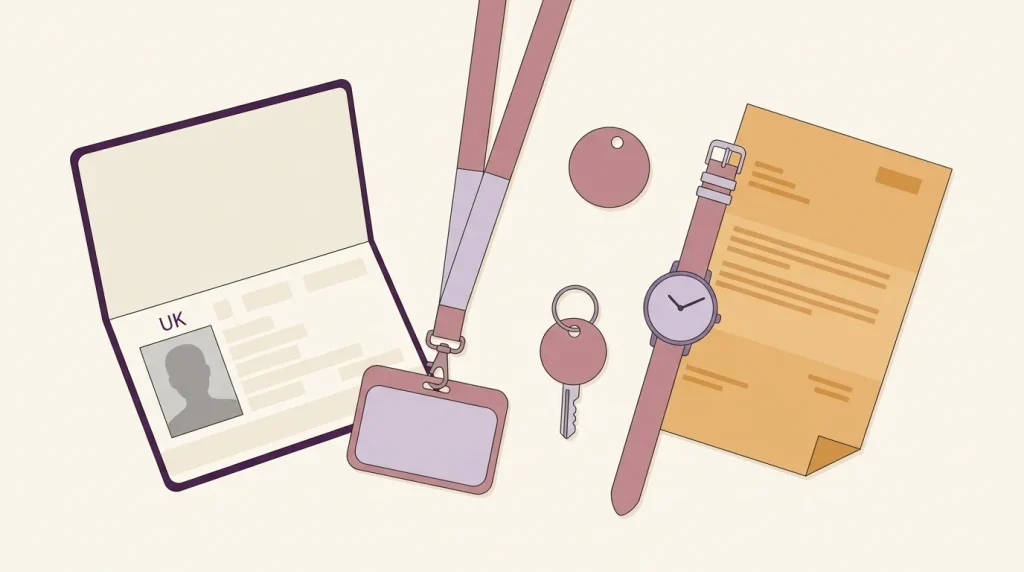
- Primary photo ID — a current, unexpired, government-issued ID with your photo and signature, with the first and last name exactly matching your RCEM account (passport or UK photocard driving licence is the safest pick).
- Secondary ID — a second valid ID with your name and either a photo or a signature (debit card, credit card, GMC card, employee ID).
- Your exam appointment confirmation — the Pearson VUE email with your appointment ID. A screenshot on your phone is fine; you will not be allowed the phone in the room but staff will use it at check-in.
Arrive 30 minutes before your scheduled start time. If you arrive more than 15 minutes late, the centre can refuse you entry and your fee is forfeit.
For an MRCEM or FRCEM OSCE at an RCEM-run venue, you bring the same primary photo ID plus your candidate joining instructions — and the rules below still apply.
For more on this, see our guide to RCEM exam centre locations UK.
Which IDs actually count?
RCEM’s rule is one line in the regulations: candidates must present at least one form of government issued identification on exam days which must meet the ID requirements for that exam. The detail lives with the delivery partner. For theory exams that is Pearson VUE, and Pearson VUE’s policy is stricter than most candidates realise — you actually need two forms of ID at the centre, not one.
Primary ID — must be all of these
- Government issued (passport, photocard driving licence, national ID card, residence permit)
- Current and unexpired
- Bears your photograph
- Bears your signature
- First and last name match your RCEM/Pearson VUE account exactly
A UK passport ticks every box. A UK photocard driving licence ticks every box. An Irish passport card works. A national ID card from your country of practice works if it has both photo and signature.
Secondary ID — needs name plus photo or signature
- Debit or credit card (with signature on the back)
- GMC registration card
- Employee/Trust ID badge
- Another government ID that did not qualify as primary
Bring two. Cost of an extra card in your wallet: zero. Cost of being turned away: your entire fee and a wait for the next diet.
What if the name on my ID does not match my RCEM account?
This is the most common reason candidates are turned away, and it bites international medical graduates hardest. RCEM’s regulations are blunt: candidates arriving without ID, or with ID that does not meet the requirements, will be turned away and will not be eligible for a refund or transfer.
Common mismatches that count as failures:
- Middle name on ID but not on RCEM account (or vice versa)
- Two surnames after marriage, only one on your registration
- Anglicised first name on RCEM but full given name on passport
- Hyphen or accent present on one and not the other
If you spot a mismatch now — even at 10pm — email exams@rcem.ac.uk and your Pearson VUE centre. They cannot always fix it in time, but a documented attempt is the only thing that helps a later appeal. Future-you tip: always copy-paste your name from your passport into the registration form.
For more on this, see our guide to Pearson VUE & Surpass test centre noise playbook.
What time should I actually arrive?
Pearson VUE’s official line is 30 minutes before. Treat that as the floor. The check-in queue at busy centres on RCEM exam days can be 20 minutes by itself, plus biometric capture, signing the candidate rules, lockers and a walk to the station.
Sensible timings on the day:
- Leave home as if your exam started 60 minutes earlier than it does
- Aim to be inside the test centre lobby 45 minutes before the appointment
- Use the toilet before checking in — once you are in the exam room, leaving the seat costs you minutes of paper time and an escorted re-check on return
Arriving more than 15 minutes late means the centre may legitimately refuse to seat you and the fee is gone. Trains break. Buses break. The Northern Line breaks. Build the buffer.
What is allowed in the exam room and what is banned?
Almost nothing personal goes to your desk. A locker is provided in the lobby for everything you bring.
Allowed at your station
- Your photo ID (the invigilator may want it next to the screen)
- The locker key
- Provided pen, laminated noteboard or scratch paper (centre-issued only)
- A clear bottle of water if the centre permits — confirm at check-in, not after
Banned — must go in the locker, switched off
- Mobile phone (off, not silent — “off” means powered down)
- Smartwatch, fitness tracker, any watch with a digital display
- Analogue watch (some centres now ban these too — leave it in the locker)
- Wireless earphones, hearing aids not declared in advance
- Notes, textbooks, flashcards, scrap paper of your own
- Calculator (the on-screen one is provided for the SBA papers)
- Wallet, keys other than locker key, bag, coat, hat, scarf
- Food (unless a pre-approved reasonable adjustment)
A watch alarm going off mid-paper, or a phone vibrating in a pocket you forgot about, is treated as potential misconduct under the Candidate Code of Conduct and can void your sitting. Empty every pocket before you leave the locker.
For more on this, see our guide to FRCEM exam dates 2026 full calendar.
What about reasonable adjustments — extra time, medication, breaks?
Anything you need at the desk that is not on the allowed list above must be approved in advance through RCEM’s Reasonable Adjustments process — not negotiated with the invigilator on the day. That includes extra time, rest breaks, glucose tablets for diabetes, inhalers, tinted overlays, ear defenders, breastfeeding/pumping breaks for the OSCE.
If you have an approval letter, bring a printed copy and the original email from RCEM. Centre staff will not see the adjustment on their booking screen unless RCEM has flagged it correctly — your paperwork is your insurance.
OSCE check-in — what is different?
OSCEs are run directly by RCEM at their own venues (currently in the UK and at international diets), not by Pearson VUE. Differences worth knowing:
- You may be asked to arrive 45-60 minutes early for registration and briefing — check your joining instructions
- Phones still go into a sealed bag or locker for the whole day, including between circuits
- You will be in either a morning or afternoon cohort and physically separated from the other cohort to protect station content
- Dress code is smart, neutral, no logos or NHS branding; no white coats; bare below the elbows for any hands-on station
- One primary photo ID is enough at the door, but bring a second piece anyway
If your OSCE venue is overseas, your visa documents and the RCEM visa support letter sit in the same wallet as your ID for the whole journey.
Pre-exam-day checklist (print this)
Essential — bring
- Primary photo ID, name matches RCEM exactly, in date
- Secondary ID
- Appointment confirmation (screenshot or printed)
- Reasonable adjustment paperwork (if applicable)
- Visa support letter and passport (international OSCE only)
- Small clear bottle of water
- Reading glasses if you wear them
- A jumper — exam rooms run cold
- Cash or card for travel and food
Banned — do not bring (or leave in the locker, off)
- Phone, smartwatch, fitness tracker
- Your own pens, paper, notes, books
- Calculator, dictionary, thesaurus
- Bag larger than the locker
- Food without prior approval
- Apple AirPods, AirTags, any wireless device
What happens if my ID is rejected at the door?
You will be asked to step aside while the test centre administrator calls Pearson VUE candidate services. They will check whether anything can be done — usually it cannot, because RCEM does not authorise on-the-spot name changes. You will be marked as a no-show. Your fee is forfeit and the attempt does not count toward your maximum (small mercy — it does not burn one of your six attempts), but you wait until the next exam diet to sit again.
If you believe the rejection was an error, document everything on the spot: get the centre manager’s name and the written reason, photograph the ID once outside, and email exams@rcem.ac.uk that day. RCEM’s Appeals process covers procedural irregularities — the only route to a re-sit without paying again.
FAQ
Can I use my GMC card as my primary ID?
No. The GMC card has your name and a photo but is not government-issued in the Pearson VUE sense, and many cards do not bear a signature. Use it as your secondary ID — it is excellent for that — and bring a passport or driving licence as primary.
What if my passport expires the week after the exam?
It is fine as long as it is valid on exam day. “Valid” means not expired. A passport that expires tomorrow but is current today is acceptable. A passport that expired last week is not, even by one day.
Do I need to bring a printed appointment confirmation?
A screenshot or the email open on your phone is accepted at every UK Pearson VUE centre — they need the appointment ID, not paper. That said, if you are travelling internationally or to a less common centre, printing it costs nothing and removes one variable.
My ID name has accents or special characters that my RCEM account does not. Is that a problem?
Usually no — Pearson VUE staff are trained to recognise diacritics as equivalent to their plain forms. But if you have time before exam day, email exams@rcem.ac.uk to get the spelling matched. On the day itself, present the ID confidently and let the invigilator decide.
Can I bring a bottle of water?
Yes at most centres, provided it is clear, label-removed, and you place it on the floor by your chair (not on the desk). Confirm at check-in. For the OSCE, water is provided in the rest stations.
What about my asthma inhaler or other medication?
Essential medication is allowed at the desk if you have declared it in advance through Reasonable Adjustments. If you have not declared it, tell the centre administrator at check-in — they will usually accommodate genuine medical needs but document it themselves rather than relying on your word at the desk.
I am breastfeeding. Can I bring a pump and bottles?
Yes, but only as a pre-approved reasonable adjustment with rest breaks built in. Contact exams@rcem.ac.uk as soon as you book, not the week before.
Do I have to take my watch off even if it is analogue?
Increasingly yes — Pearson VUE treats any wrist-worn device as a cheating risk. The room has a wall clock or on-screen timer. Leave the watch in the locker.
What if I forget my second form of ID?
Tell the centre administrator immediately. A bank card in your wallet usually saves you. If you have genuinely brought nothing else and your primary ID is a UK passport with photo and signature, some centres will exercise discretion — but do not count on it. Always carry two.
Can I bring snacks for the one-hour break in the SBA?
You can bring food into the locker and eat it in the candidate break area, but nothing goes back into the exam room with you. Plan something that is one-handed, low-mess and does not need refrigeration.
What if I have a different name on my visa than on my RCEM account?
For international OSCE candidates, the name on your visa support letter must match your passport, and the name in your RCEM account must match your passport. If any of those three drift apart, raise it with exams@rcem.ac.uk weeks before you travel — not at the airport.
Is the locker actually big enough for a coat and bag?
Standard test centre lockers are small — about A4-paper deep, twice that wide. A laptop bag fits. A full-size rucksack with a winter coat stuffed on top may not. Travel light on exam day.
One last sanity check before bed
Lay out the following on the kitchen table tonight:
- Primary photo ID — check name, check expiry, check it has your signature
- Secondary ID
- Appointment email open on your phone
- Clear water bottle, label removed
- Route to the centre checked on Google Maps
Set two alarms. Eat breakfast. Arrive 45 minutes early. The ID is the boring administrative gate before you get to show what you actually know — clear it cleanly and the rest of the day is just the exam you have already prepared for.
Facts last verified . RCEM regulations and Pearson VUE ID policy are updated periodically; always cross-check your specific appointment email and the latest RCEM Exam Regulations & Policies page in the week before your sitting.
Next step: If your exam ID is sorted and the panic-search is over, the most useful thing you can do with the next hour is one short, high-yield revision pass. Our SBA and OSCE question banks at emfinalexams.com are built for exactly this — last-evening, calm-the-nerves, refresh-the-recall practice. Good luck.
Ready to build your plan? EMF Premium gives you all 40,000+ questions, 20 mocks and 1,215 OSCE stations from £29/month — or a one-off 3- or 6-month pass.