
You have just walked out of a mock paper. You scored 62%. The RCEM cohort passes around 51% on the FRCEM SBA (2024 diet). Your QBank dashboard says you have completed 1,847 SBAs, which feels like a lot until you read a Reddit thread where someone claims to have done 5,000 and still failed. So the obvious question lands at 2am: have I done enough? See also our guide to why a qbank pass does not predict an FRCEM SBA pass.
This article is the honest answer. RCEM does not publish a minimum question count, and no one outside the College can give you one either. What we can do is triangulate from the cohort data RCEM does publish, what successful candidates report on Reddit and Twitter, what the major UK question banks claim, and what actually predicts a pass on the day. The number matters less than how you use the questions. See also our guide to our pick of the best FRCEM SBA question bank for 2026.
TL;DR. Most candidates who pass the FRCEM SBA on first sitting report completing 2,000 to 3,000 high-quality SBAs across a 4-6 month run-in, with the central estimate sitting at roughly 2,500. Below 1,500 is risky unless you already score 65%+ early; above 4,000 shows diminishing returns and often signals avoidance of weak topics. The single best predictor is not raw count but your timed-mock score in the final month — aim to be hitting 68-72% on full-length, unseen 180-question mocks two weeks out.
What does the FRCEM SBA actually test?
Before you decide how many questions are enough, anchor on the format. The FRCEM SBA is 180 single best answer questions delivered as two 2-hour papers with a one-hour break, mapped to the 2021 RCEM curriculum across 12 Specialty Learning Outcomes (FRCEM Exam Regulations 2025). The pass mark is set by the Angoff method plus one standard error of measurement, recalibrated for each diet, so the absolute mark fluctuates — but the working assumption candidates use is around 60-65%.
You get a maximum of four attempts. First-time pass rates across all RCEM exams in 2024 were 66.6%; the rate falls to 31.4% on second attempts and stays around 31% thereafter. UK trainees pass the FRCEM SBA at 79.6% overall; non-trainees and IMGs sit much lower. That distribution tells you something most QBank marketing doesn’t: resit attempts are markedly harder than the first, almost certainly because the easier-to-spot revision gaps were closed first time round. Treat your first attempt as the one that matters most.
What number do successful candidates actually report?
There is no published RCEM minimum, but five overlapping data sources point to a consistent band:
- UK exam-prep providers (StudyMedical, StudyFRCEM, FRCEM QBank) converge on 2,000-2,500 quality SBAs as the typical first-pass volume, with 1,000-1,500 cited as a minimum-viable floor and 3,500-4,000+ flagged as the upper end for repeat-sitters or those who want full coverage twice over.
- Reddit threads on r/doctorsUK and r/JuniorDoctorsUK show numbers from 1,200 (passers with strong baseline knowledge from MRCEM SBA) up to 4,000+ (often resitters or anxious passers).
- The Luka Randic medallist’s account on RCEMLearning describes working through the full RCEMLearning SBA and SAQ archive plus targeted reading — not a four-figure QBank grind.
- RCEM’s own 2024 pass data shows the cohort average on the September 2024 MRCEM SBA was 105/179 with a pass mark of 117/179 — a roughly 7-point gap. Closing that gap is what your question practice has to deliver.
- Time-budget maths: at a sustainable 30-50 SBAs per day with debrief, you generate 900-1,500 per month. A 4-month dedicated run gets you to 3,600-6,000 attempts, but only ~2,000-2,500 unique questions if you’re cycling through one or two banks.
If you are looking for one number to plan against, 2,500 unique high-quality SBAs across 4-6 months is the realistic central case for a first-attempt UK trainee passer. Below that, you need to compensate with either a strong knowledge base or aggressive mock-exam debrief.
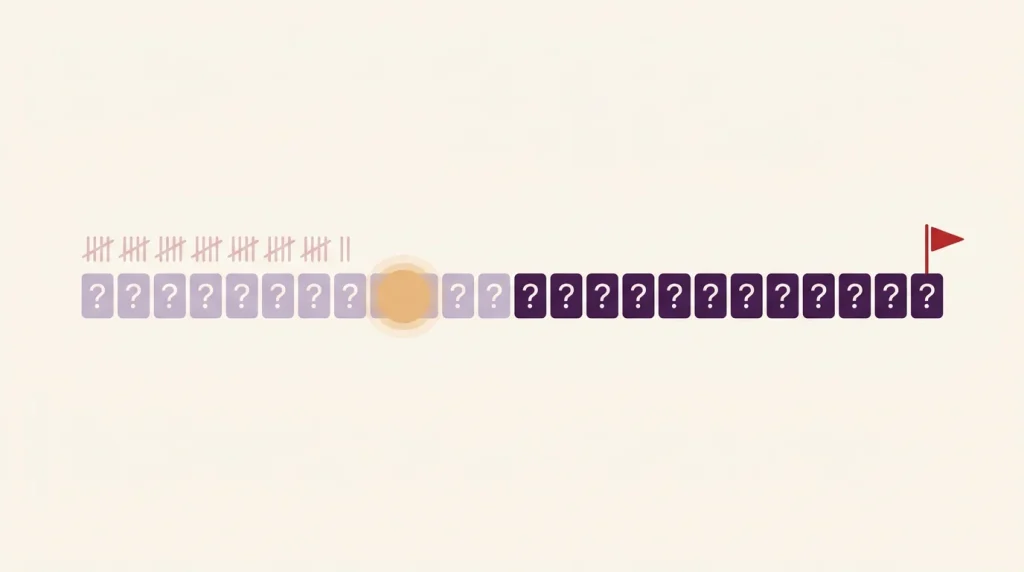
Pass-likelihood by question-count band: what the cohort reports suggest
The table below is a synthesis of candidate-reported volumes against self-reported outcomes from public threads, study-provider blogs and RCEM cohort data. It is not a randomised trial — treat it as a calibration aid, not a guarantee. Quality and debrief matter as much as the absolute count.
| Unique SBAs completed (with debrief) | Typical candidate profile | Realistic first-attempt pass likelihood |
|---|---|---|
| Under 1,000 | Late starter, working full clinical, hoping clinical experience carries them | Low — well below the 51% cohort average |
| 1,000-1,500 | Strong MRCEM SBA recall, working a few weeks out, high baseline | Borderline — close to the cohort average |
| 1,500-2,500 | Most first-attempt UK trainee passers | Above average — matches the 66% first-attempt overall rate when paired with mocks |
| 2,500-4,000 | Methodical revisers, often second-cycle through their bank | High — approaching the 79.6% UK trainee rate |
| 4,000+ | Resitters, anxious revisers, or those avoiding mocks | Variable — diminishing returns; volume without strategy does not rescue weak areas |
Notice the curve flattens above 2,500. Adding another 1,500 questions on top of a solid base does not buy you the same uplift as the first 1,500 did. What does buy you a pass is closing the specific SLO gaps your mocks expose — and that needs targeted practice, not bulk consumption.
Why quality crushes quantity (and why grinding without debrief backfires)
Every UK provider and every successful Reddit poster says the same thing in different words: 1,500 questions reviewed properly beats 3,000 rushed. There are three reasons this is more than a platitude.
First, the SBA tests pattern recognition under load. You will see 180 vignettes in four hours. Speed and confidence come from having seen the pattern before — not from having ground 4,000 questions you never looked back at. If you cannot articulate why the wrong options were wrong, you have not converted a practice attempt into durable learning.
Second, recall without spaced repetition decays fast. Doing 80 SBAs in one weekend session and never revisiting the wrong ones means you have generated data, not knowledge. The candidates who do best either tag their incorrects for revisit at 1, 2 and 4 weeks, or run their bank twice with the second pass focused only on the questions they previously got wrong or guessed. See also our guide to active recall and spaced repetition for FRCEM SBA.
Third, raw volume hides curriculum gaps. The FRCEM SBA is sampled across 12 SLOs. If you have done 3,000 questions but they are clustered in resus, trauma and cardiology because that is where you feel comfortable, you will get blindsided on dermatology, ENT, paediatric safeguarding and statistics. Track your accuracy by SLO and weight your remaining practice against your weakest three.
How much time per question? The 2-3 minute debrief rule
If you are honest about how long a good SBA attempt takes, the maths gets tight. A useful working budget per question is:
- 60-90 seconds to read and answer (matches in-exam pace of ~80 seconds per question)
- 2-3 minutes to read the explanation, check the linked guideline, and add one note to your weak-topic list
That is 3-4 minutes per question in revision mode. At 40 SBAs per day, you are committing 2-2.5 hours daily — which is sustainable for most ST trainees but means a 2,500-question target requires a genuine 10-12 week dedicated push, not an evenings-and-weekends afterthought. If you have less time, you have to be ruthless about which SLOs you skip practice questions on entirely and rely on guideline reading instead.
Where do mock exams fit in?
Full-length 180-question timed mocks are the single most reliable predictor of how you will perform on the day. Candidate reports and most UK question banks now offer 3-5 full mocks; aim to sit at least three. Your scoring trajectory matters more than any one mark:
- Early prep (months 4-3 out): 50-60% on a mock is normal and not alarming
- Mid prep (month 2): 60-68% expected if you are on track
- Final 2 weeks: 68-72%+ on a full unseen mock is a strong pass-likelihood signal
If you are still sitting at 55% two weeks out, more raw questions are unlikely to fix it — focused topic revision on your three weakest SLOs and a re-read of high-yield RCEM guidelines (sepsis, major haemorrhage, NICE head injury, paediatric sepsis, DKA, asthma, anaphylaxis) is a higher-yield use of the remaining time.
Which question banks actually deserve your money?
The bank itself matters less than the discipline of how you use it, but quality varies. The non-negotiable features:
- Mapped to the 2021 RCEM curriculum, with SLO-level performance tracking
- Explanations that reference NICE, RCEM clinical guidelines or BTS/SIGN where relevant — not one-line answers
- Regular updates (post-2021 content; ALS 2025 updates incorporated; resus and stroke guidance current)
- At least one full-length timed mock that mimics the 90+90 split
RCEMLearning’s own SBA and SAQ archives are free to members, high quality and high yield — the Luka Randic medallist’s account on the RCEMLearning blog is built around them, not a paid bank. Most successful candidates combine RCEMLearning with one or two paid banks rather than relying on a single source. Beware banks with no curriculum mapping, brief explanations, or pre-2021 content.
What about candidates with limited time?
If you have three months and a full-time clinical job, 2,500 unique SBAs is unrealistic. A workable compressed plan:
- Aim for 1,200-1,500 quality SBAs total
- Front-load your three weakest SLOs in weeks 1-6 (do a diagnostic mock in week 1 to identify them)
- Skip practice on your three strongest areas — rely on a guideline re-read instead
- Two full-length mocks at week 8 and week 11
- Final week: review every incorrect from your two mocks, read the relevant RCEM guideline, and do not start any new content
This plan has been reported to pass by candidates with strong MRCEM SBA recall and active clinical exposure. It is a tighter margin than the 2,500-question plan but it is honest.
The five most common revision mistakes that waste questions
- Doing questions without reading the explanation. The single biggest waste of revision time. If you do not have the time to read the explanation, you do not have the time to do the question.
- Repeating questions too soon. Revisiting an incorrect after 48 hours tests your short-term memory, not your retention. Wait two to three weeks.
- Practising only the topics you enjoy. The exam blueprint will find your weak SLOs whether you do or not. Track accuracy by SLO and weight against your bottom three.
- No timed practice until the final week. Exam pace is a skill. Do timed 30-question blocks from month 2 onwards.
- Ignoring mock results. Each mock should produce three concrete revision actions — not a feeling. Write them down.
What this means for your revision plan tonight
If you are at 1,847 SBAs with 6 weeks to go and scoring 62% on a recent mock, you are in a credible position. You do not need to grind another 2,000 SBAs. You need:
- One full-length timed mock this weekend to set a baseline
- Your bottom three SLOs identified by Monday
- Targeted practice in those three SLOs for the next three weeks (200-300 questions per SLO with thorough debrief)
- A second full mock at week 4 and a third at week 5
- The final 5-7 days for guideline re-reads and revisiting only the questions you got wrong on mocks
That gets you to roughly 2,500-2,800 unique SBAs by exam day, with the last 700 weighted directly at your weakest areas. It is the highest-yield path with the time you have left.
FAQ
Is there an official RCEM minimum number of practice questions?
No. RCEM publishes the exam structure, blueprint and pass-rate statistics but does not specify or endorse a minimum question count. Anyone quoting one is extrapolating from candidate reports and provider data.
What pass mark should I aim for in my QBank?
Most candidates target a consistent 70%+ on revision-mode questions in the final month, and 68-72% on full-length unseen timed mocks. The actual pass mark on the live exam is Angoff-set per diet and typically sits in the low 60% range, but you want headroom because exam-day stress, novel questions and time pressure cost a few percentage points.
Can I pass with fewer than 1,500 questions?
Yes, but you need to compensate. Candidates who pass on lower volumes typically have strong recent MRCEM SBA recall, very active clinical exposure across the curriculum, and an aggressive mock-and-debrief approach. It is doable but a smaller margin of safety.
Should I redo questions I got right?
Only if you guessed or were unsure. Repeated correct answers without genuine uncertainty are low yield. Spend that time on new questions or on incorrects you have not yet revisited.
How many full-length mocks should I sit?
At least three — one as an early diagnostic, one mid-prep, one in the final two weeks. Time them properly: two 2-hour papers with a one-hour break, no phone, no notes. Sitting four or five does not add much over three.
Are multiple question banks better than one?
Combining RCEMLearning’s free SBA/SAQ archive with one paid bank is the most common approach. Adding a third bank tends to produce overlap and decision fatigue without much extra coverage. Total volume across all banks is what matters, not the number of banks.
Do MRCEM SBA questions count toward my FRCEM prep?
Partially. The clinical reasoning style overlaps, but FRCEM SBA pitches at a more senior decision-making level — definitive management, system-level judgement, ethical and resource calls. MRCEM-level banks under-prepare you for the FRCEM register and should not be the only resource.
How do I know which SLOs are my weakest?
Run your QBank in tutor mode for the first month and review the SLO-level dashboard. Do a full diagnostic mock at month 3 or 4 and rank your accuracy by SLO. Your bottom three should drive your topic plan, not your comfort.
How long before the exam should I stop doing new questions?
Most candidates report stopping new content 3-5 days out and using the final stretch for incorrect-question review, guideline re-reads and sleep. Cramming new SBAs in the final 48 hours rarely pays off and often increases anxiety.
What if I have failed before — does the question count change?
The 2,500 central estimate still holds, but resitters should be much more aggressive about identifying why they failed. The RCEM feedback letter will indicate weak SLOs; weight at least 60% of your second-attempt practice there. The cohort-wide second-attempt pass rate sits around 31%, so a “do the same thing harder” plan is unlikely to work — change the strategy.
Does the pass rate vary much between diets?
The FRCEM SBA sits in the 47-55% range across recent diets (51.1% in 2024, 47.0% in 2023). The Angoff-set pass mark adjusts for diet difficulty, so the rate is a cohort outcome rather than a fixed bar. Do not bank on a kinder diet.
Where should I read more from RCEM?
The RCEM exams page and RCEMLearning are the two primary sources. The published Exam Pass Rate Report 2024 is the most useful single document for understanding cohort performance and differential attainment.
Next step
If you want SLO-mapped FRCEM SBA practice with consultant-written explanations, more than 40,000 SBAs and full-length timed mock papers calibrated to the 2026 diet, start with EM Final Exams. Run a diagnostic mock this week, find your bottom three SLOs and let the plan above carry you to the exam.
Facts last verified against the RCEM Exam Regulations 2025 (v1) and the RCEM Exam Pass Rate Report 2024 (v2.2). Cohort pass rates change each diet — check rcem.ac.uk for the most recent figures before relying on them in your revision plan.
Ready to build your plan? EMF Premium gives you all 40,000+ questions, 20 mocks and 1,215 OSCE stations from £29/month — or a one-off 3- or 6-month pass.